
The Tide Is Turning, the Sea Is Churning: Responding to El Niño’s Call – MBIEN#13
September 9, 2026
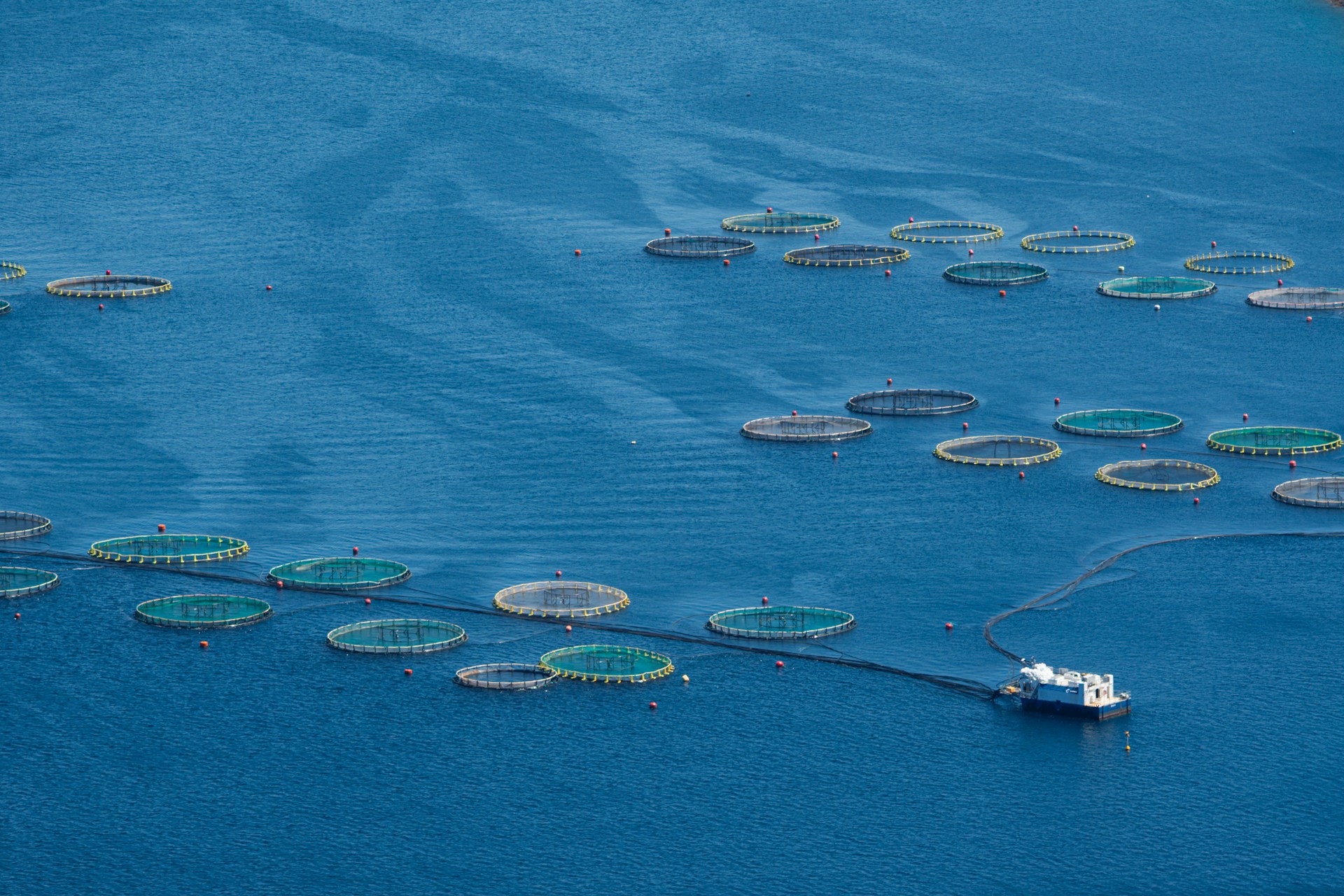
Spring has arrived on Bruny Island, but the warming days carry a warning. Forecasters are predicting a super El Niño this summer—an ocean-scale event that will heat the unique marine environments surrounding Bruny Island, stress the already struggling reefs, and push the caged Atlantic salmon in their open-net pens to the edge of survival. The sea is churning with change. The question is whether we will weather the coming storm as passive observers, or as active participants in the healing of our waters.
The Ocean’s Mighty Call
El Niño is not a distant meteorological abstraction. It is the planet’s largest module—the Pacific Ocean—flexing its thermal muscle, and its effects ripple directly into the Channel. Warmer water holds less oxygen. Disease organisms proliferate. The salmon in their pens, already stressed by overcrowding and the legacy of antibiotic-resistant bacteria, will face another brutal summer. Last year’s toll of 9,000 tonnes of dead fish between January and March may be repeated, or exceeded.
The ocean is calling us to attention. And across Bruny Island, across Tasmania, across the world, people are answering.
The Tide Is Turning
Look at what has happened in just the last month.
In Korea, at the 48th session of the World Heritage Committee, NOFF’s Eloise Carr stood alongside the Wilderness Society and the Tasmanian Aboriginal Centre to present evidence of the harm the salmon industry is inflicting on Macquarie Harbour and the Maugean skate—a species of outstanding universal value, a living link to Gondwana. They asked for a Reactive Monitoring Mission to Tasmania and for State of Conservation reporting to be reinstated. This means Australia will be formally scrutinised by the international community. The salmon industry can no longer hide behind domestic regulators. The world now knows.
At Parliament Lawns in Hobart, a few hundred people gathered in solidarity with the Tasman Peninsula after the EPA renewed the Long Bay salmon lease—a decision that delivers neither protection nor enhancement of the environment, despite the EPA’s own legislated mandate. The rally brought together every “Salmon-out” group. The message was clear: communities do not approve.
In the boardrooms, a shareholder campaign coordinated by SIX has gathered 230 investors to challenge Woolworths’ chair over the supermarket giant’s continued sourcing of salmon from Macquarie Harbour. The motion will be voted on at the AGM on 29 October. Consumer power is waking up.
In Parliament, Independent MP Peter George moved to phase out salmon hatcheries on Tasmania’s rivers, hatcheries that pollute Hobart’s drinking water and push antibiotics into the food web. Labor, despite promising to support this position, voted against it. But the motion itself is a marker: the political tide is shifting, even if the old parties are slow to heed the changing times.
And in the Channel itself, a new chapter of science is about to open.
The Reef Health Project: Seeing Our Seafloor Clearly
On 22 September at 4pm, the Pennicott Foundation and IMAS will host a community forum at the Bruny Island Cruises Visitor Centre in Adventure Bay. Dr Camille White, a marine ecologist leading the five-year Pennicott Reef Health Project, will present early findings on the condition of reef ecosystems across the D’Entrecasteaux Channel.
This is not just another research update. It is the first comprehensive, community-facing assessment of what is happening beneath the surface of the waters that define Bruny Island. The project uses traditional survey techniques alongside emerging monitoring tools—underwater drones, photogrammetry, environmental DNA—to track reef condition across seasons and sites. It will tell us which reefs are thriving, which are struggling, and what factors are driving the difference.
For the BlueBiosphere, this is essential knowledge. We cannot restore what we do not understand. We cannot protect what we cannot see. The reef health data will inform every action we take—from where we prioritise kelp restoration, to how we push for nutrient budgets, to what we demand from the salmon industry and the EPA.
If you can, be there. Bring your questions. Bring your neighbours. Robert Pennicott will facilitate the Q&A. Light refreshments will be served. The sea is calling; let us learn to read its signals.
Bruny Island Forum: Tuesday 22 September, 4–6pm, Bruny Island Cruises Visitor Centre, 1005 Adventure Bay Road. Register via Eventbrite. Dover and Hobart forums follow on 23 and 24 September.
The Shadow of the Storm
Yet even as the tide of awareness turns, the storm clouds gather.
The Whale Point expansion has been approved, against community objection. More pens. More fish. More nutrient load. More antibiotic risk. The decision was made by elected representatives who have, as Peter George’s research reveals, held an “excessive number of meetings” with the salmon industry. The revolving door between regulation and industry spins on.
The Skretting fish food scandal deepens: a qualified technician has alleged that rotting feed pellets—potentially contaminated with mycotoxins—were being processed at the factory that supplies Tasmania’s salmon farms. Bio Security Tasmania is investigating. If proven, this means the farmed salmon on supermarket shelves may have been fed on decaying animal by-products and mould. The public health implications are serious. The industry’s reassurances ring hollow.
And NOFF has a new campaigner. Jasmine, a Canadian marine biologist who fell in love with Tasmania’s giant kelp forests, has joined the fight. She will be working alongside the community to protect and restore the temperate marine ecosystems that make this island unique. Her arrival is a reminder: this movement is growing, and it is attracting talent from across the world.
What We Must Do
The super El Niño is coming. The salmon in their pens will suffer. The wild fish will feel the heat. The reefs will be stressed. And the communities that depend on these waters will watch, and worry, and wonder what more they can do.
The answer is the same as it has always been: act locally, think modularly, and never stop pushing.
1. Attend the Reef Health Forum. Knowledge is the foundation of action. Be at the Bruny Island forum on 22 September. Ask hard questions. Demand that the findings be made public and that they inform regulation.
2. Report what you see. As the waters warm, be vigilant along the coastline. Report fish kills, unusual blooms, dead wildlife, or pollution to the EPA, to NOFF, and to BIEN. Your observations are our intelligence. The more eyes on the water, the harder it is for bad practice to hide.
3. Pressure the politicians. The Whale Point expansion shows that quiet lobbying works for industry. It must work for communities too. Write to your state MP, your federal MP, the Premier, and the Environment Minister. Tell them you do not approve of expansion. Tell them you want nutrient budgets, real-time transparency, and a permanent ban on antibiotics in open water.
4. Support the Woolworths shareholder action. If you hold shares, vote. If you shop, speak to the store manager. Consumer pressure moves corporate behaviour faster than regulation.
5. Join the movement. Whether through NOFF, BIEN, the Pennicott Foundation’s citizen science programs, or your local coastcare group, find your place. The BlueBioSphere is not a spectator sport.
6. Prepare for the storm. The coming El Niño may bring another summer of mass salmon mortalities, antibiotic debacles, and public outrage. Be ready to document, to witness, and to advocate. The ocean sends a signal: let’s listen.
The tide is turning. The sea is churning. The super El Niño is the ocean’s mighty call—a reminder that the living natural worlds – the operating systems of this planet – are not passive backdrops to human industry. They are active, dynamic, and increasingly stressed. Bruny Island sits at the edge of that stress, but also at the edge of possibility.
The BlueBiosphere is not a retreat from the storm. It is a way of learning to sail through it, together, with open eyes and hands firmly on this tiller. The tide is turning; let us turn with it.