LIECHTENSTEIN REED SCHOLARSHIP PROGRAM

The Liechtenstein Institute for Strategic Development with support by the Government of Liechtenstein is pleased to provide its support in the Transforming Energy Access Learning Partnership (TEA-LP) program at selected universities across Africa, in keeping with a number of UN Sustainable Development Goals – including #7: affordable and clean energy for all.

 
GLOBAL MARITIME ACCORD ACADEMY

The Global Maritime Accord (GMA) and its Academy (GMAA) are focused on the health of oceans in a globally shared effort. They aim to strengthen and support the implementation of the Intergovernmental Conference on legally binding instruments under the United Nations Convention on the Law of the Sea on the safeguarding of marine biological diversity in areas beyond national jurisdiction.

The GMAA is an initiative led by Liechtenstein Institute for Strategic Development with the Society of Aerospace, Maritime and Defence Studies (SAMDeS). Sai University, global ALLIES, The Trebuchet, and the International Military Council on Climate and Security are among its supporters.

 
LISD EMBEDDED PRACTITIONERS AND ACTIONS PROGRAM - LEAP

Let LISD assist in your academic, professional and personal development. We provide an innovative form of internship placement and monitoring programs that are tailored to the interests and needs of a few, carefully selected individuals each year. Besides placement in one of our core projects on the basis of availability there is also the possibility of one of several advanced modes.

 
CONFERENCES & WORKSHOPS

We develop and manage sustainability events, conferences, communication campaigns, publications and training programs. Latest events include:

  • LISD hosted the inaugural World Systemic Forum (WSF) Feature 2025 at the University of Liechtenstein
  • LISD with British Open University Intelligent Environments Webinars (2024)
  • Global Maritime Accord Webinars (since 2023)
  • Transition Workshops Geneva with The Fondation Braillard Architectes (since 2020)
  • Asian Sustainable Transport Training Workshop, 10-11 November 2020, with UNCRD and IRENA
  • European Green Australia Summit (EUGAUS 2017) Berlin, Germany
CULTURAL PRESERVATION STRATEGIES

LISD is collaborating with Gregg Nakano of Pacific ALLIES to formally establish Kwajalein Atoll Sustainability Laboratory (KASL), which will hopefully empower next generation leaders to protect, sustainably manage and restore ecosystems carrying capacity in the face of existential climate change threats. The aim is to help KASL stakeholders to develop and implement culture preservation strategies in the face of forced climate change migration.
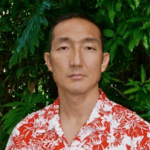
Gregg Nakano, LISD Fellow
 
PUBLICATIONS

We publish literature on sustainable urban development and renewable cities.
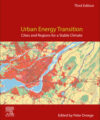
Urban Energy Transition: Cities and Regions for a Stable Climate
Urban Energy Transition, Third Edition: Cities and Regions for a stable climate is the most current scientific and practice-based compendium on energy transformations in the global urban system. It also yields perspectives on climate stabilization and the need for comprehensive and additional climate action and policy frames that work in conjunction with the energy transition. This fresh volume examines both established and emerging economic, design, governance, policy and technology related insights and contains contributions from Africa, Asia, Australia, Central Europe and North America.

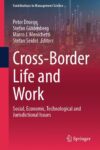
Cross-Border Life and Work: Social, Economic, Technological and Jurisdictional Issues
Cross-Border Life and Work, combines perspectives from economics, sustainability and information systems research. The book showcases the impact of digitization and other modern topics on cross border work. It also addresses issues of technology, infrastructure planning and policy making

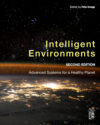
Intelligent Environments: Advanced Systems for a Healthy Planet
This second edition examines a range of baseline and benchmark practices but also unusual and even sublime endeavors across regions, currencies, infrastructure, architecture, transactive electricity, geodesign, net-positive planning, remote work, integrated transport, and artificial intelligence in understanding the most immediate spatial setting: the human body. The result of this quest is both highly informative and useful, but also critical. It opens windows on what must fast become a central and overarching existential focus in the face of anthropogenic planetary heating and other threats—and raises concomitant questions about direction, scope, and speed of that change.

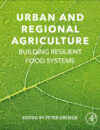
Urban and Regional Agriculture: Building Resilient Food Systems
The book explores the sustainable integration of food provision, distribution and consumption through urban farms, agricultural systems, user communities and structural facilities designed to optimize food production and consumption. The book addresses the fundamental and pressing challenges of urban planning problems, waste minimization, food sourcing, access and equity issues, and multiple land use optimization. Sections cover the need and opportunities of urban agriculture, discuss tradition and transition, space and regulatory topics, explore the range of urban agriculture options (aquaculture to urban permaculture), discuss support structures and constructs of physically creating urban agricultural areas, and much more.

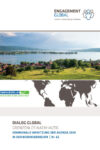
DIALOG GLOBAL GRENZENLOS NACHHALTIG KOMMUNALE UMSETZUNG DER AGENDA 2030 IN DER BODENSEEREGION | Nr. 62
(in German) GLOBAL DIALOGUE: SUSTAINABLY WITHOUT BOUNDS – MUNICIPAL IMPLEMENTATION OF THE 2030 AGENDA IN THE LAKE CONSTANCE REGION | No. 62. This publication by SKEW focuses on individual municipalities from the unique four-country region around Lake Constance and provides examples of the efforts these municipalities are undertaking in implementing the 2030 Agenda and the 17 Sustainable Development Goals, as well as the challenges they face. The publication aims to inspire by demonstrating the impact that local engagement can have; as well as to motivate and encourage other cities, towns, and districts to develop and expand their local sustainability strategies under the umbrella of the 2030 Agenda and to live up to their global responsibility.

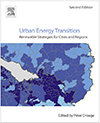
Urban Energy Transition: Renewable Strategies for Cities and Regions
Urban Energy Transition, second edition, is the definitive science and practice-based compendium of energy transformations in the global urban system. This volume is a timely and rich resource for all, as citizens, companies and their communities, from remote villages to megacities and metropolitan regions, rapidly move away from fossil fuel and nuclear power, to renewable energy as civic infrastructure investment, source of revenue and prosperity, and existential resilience strategy.

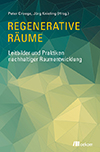
Regenerative Räume: Leitbilder und Praktiken nachhaltiger Raumentwicklung
(in German) Regenerative Spaces: Guiding principles and practices of sustainable spatial development. This book examines the realisation that existing development models are outdated and that new paths to sustainability must be found quickly – especially in urban and regional development, in the management of space, and above all, in the treatment of people and their institutions. Global warming, species extinction, peak growth, energy crises, global migration, inequality, and injustice are symptoms of a planning and development model that urgently requires fundamental reform.

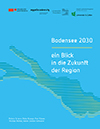
Bodensee 2030: ein Blick in die Zukunft der Region
(in German) This publication summarizes the findings from the dialogue on the future of the Lake Constance region. It shows how regional experts and decision-makers assess the region’s prospects and where they see the greatest need for action regarding future cross-border cooperation. By outlining specific areas of action that are considered necessary for the future from a scientific perspective and based on empirical findings, the aim was to stimulate further discussion about the future of the Lake Constance region.

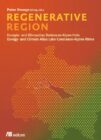
Regenerative Region Energie- und Klimaatlas Bodensee-Alpenrhein / Energy- and Climate Atlas Lake Constance-Alpine Rhine
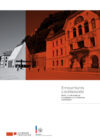
Regions play a critical role in working towards to a carbon emissions and nuclear-energy free future. At the regional level resilient renewable energy systems can evolve, supporting community health and security – and producing substantial value added benefits. This large territory across four central European countries can become a model region if these potentials are fully utilised, building on the many current initiatives. This is demonstrated by the multidisciplinary Lake Constance-Alpine Rhine Project – it explores the energetic, organisational and economic opportunities of a renewably autonomous region.

Erneuerbares Liechtenstein: Modell und Werkzeug zur Energieplanung im Fürstentum Liechtenstein
(in German) This brochure summarizes the principles and results of the study “Renewable Liechtenstein.” Its two main objectives are: determining the country’s capacity for self-sufficiency in renewable energy, and providing a practical tool for energy planning in the country—a spatially differentiated model that is meaningful over the coming years and decades. The project was carried out at the University of Liechtenstein from 2010 to 2012 with support from its research funding program and the government. The full report is available upon request, and the “Renewable Liechtenstein” model is available to all interested parties in the country for application at the national level, as well as in municipalities and specific sectors. Please contact us for the full publication.

100 Percent Renewable: Energy Autonomy in Action
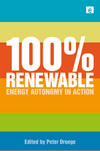
This publication documents practices, projects and plans by companies, individuals, communities, cities and countries determined to be entirely independent from fossil fuel and nuclear power.

100% Renewable Energy and Beyond for Cities
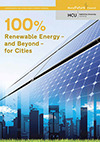
This document sketches out the options and the processes that have started to transform urban energy systems and that will power our cities in the very near future.

Climate Design

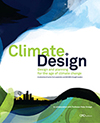
Climate change and dwindling global resources are challenging the professional practice, demanding new design and planning approaches that achieve more with less. This rich volume for designers, architects, planners, policy makers and academics alike explores the current paradigm shift and illustrates how new thinking can convert investments in urban infrastructure, land use and development into resilient and enduring support systems for human and environmental prosperity.

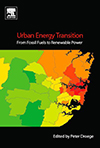
Urban Energy Transition: From Fossil Fuels to Renewable Power
This compendium of 28 chapters presents perspectives that are both local and international in scope and relevance: perspectives from 18 countries in both the developed and developing world.

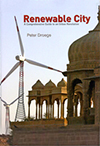
The Renewable City: A comprehensive guide to an urban revolution

This is a guide to an unprecedented urban transformation, squarely focused on action. It is built on successful urban sustainability trends, emerging infrastructure directions, renewable energy applications and related new approaches to urban planning and the design of cities.
PLANNING AND DESIGN STUDIO PROJECTS

Project H.O.M.E: LISD habitability projects on Mars and Earth. LISD conducts from 2014 into 2018 a series of projects exploring fundamental issues of terrestrial habitability on its multi-year project ‘Habitability of Mars and Earth (H.O.M.E)’.

H.O.M.E commenced in 2014 with a collaborative design investigation with the University of Liechtenstein and Liquife Systems Group, Vienna as well as the European Space Technology Centre (ESTEC) at the Europen Space Agency (ESA) in the Netherlands. We explored realistic yet creative scenarios and habitation pathways to facilitate a colony of 1'000 over a period of 10 years. The key mission was to understand the requirements for totally regenerative and habitability building settlements on earth: greenhouse gas sequestering, pollution managing, oxygen producing, biodiversity / volume enhancing and entirely renewable energy powered houses, buildings, towns, cities and regions.

STUDIO MARS

H.O.M.E commenced in 2014 with a collaborative design investigation with the University of Liechtenstein and Liquife Systems Group, Vienna as well as the European Space Technology Centre (ESTEC) at the Europen Space Agency (ESA) in the Netherlands. We explored realistic yet creative scenarios and habitation pathways to facilitate a colony of 1’000 over a period of 10 years. The key mission was to understand the requirements for totally regenerative and habitability building settlements on earth: greenhouse gas sequestering, pollution managing, oxygen producing, biodiversity / volume enhancing and entirely renewable energy powered houses, buildings, towns, cities and regions.
We searched for and identified one of the most destructive of the many planet killing machines active today: the 3-Gigawatt brown coal combustion and associated mining fields of Jänschwalde in the Brandenburg region of Lusatia near Berlin, Germany. The focus was of finding strategies to end brown coal mining and power conversion, and to regenerate region, area and power station into life regenerating, prosperity enhancing, carbon sequestering, oxygen producing, biological diversity and vitality enhancing, ground and surface water rehabilitating settlements, landscape strategies and economic development programs. Collaboration and support by Green Liga, Protestant Church, Cottbus Chamber of Commerce, Spreewald Foundation and others

STUDIO EARTH: Lausitz im Wandel / Lusatia in Transition

We searched for and identified one of the most destructive of the many planet killing machines active today: the 3-Gigawatt brown coal combustion and associated mining fields of Jänschwalde in the Brandenburg region of Lusatia near Berlin, Germany. The focus was of finding strategies to end brown coal mining and power conversion, and to regenerate region, area and power station into life regenerating, prosperity enhancing, carbon sequestering, oxygen producing, biological diversity and vitality enhancing, ground and surface water rehabilitating settlements, landscape strategies and economic development programs. Collaboration and support by Green Liga, Protestant Church, Cottbus Chamber of Commerce, Spreewald Foundation and others
We conducted participatory design workshops with local communities, businesses, government and non-governmental organisations, to envision sustainable plans for the region of Lusatia.

Studio Lusatia Community Workshop

We conducted participatory design workshops with local communities, businesses, government and non-governmental organisations, to envision sustainable plans for the region of Lusatia.